
LEVEL 3 INSPECTION
When Hidden Problems Need
Clear Answers
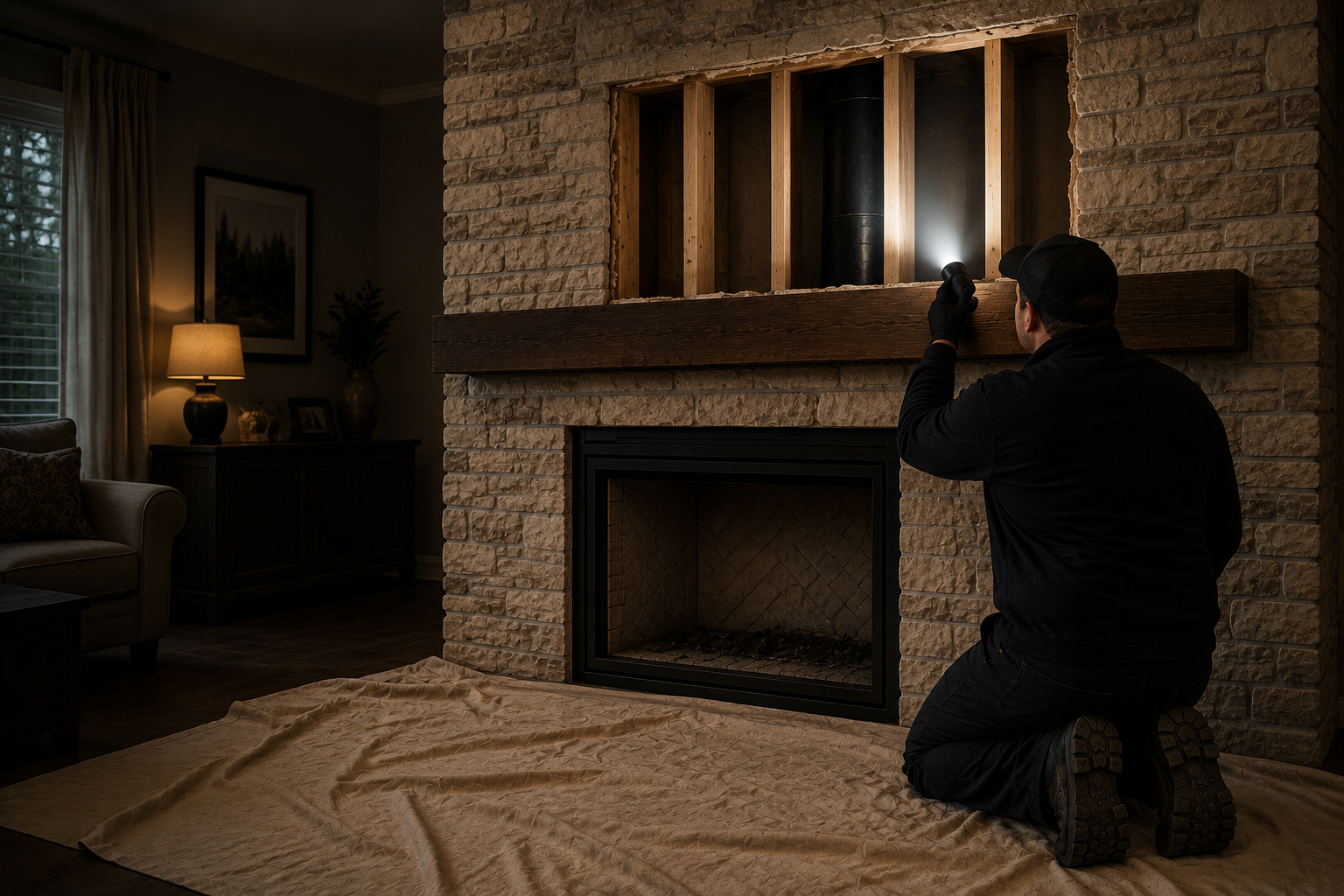
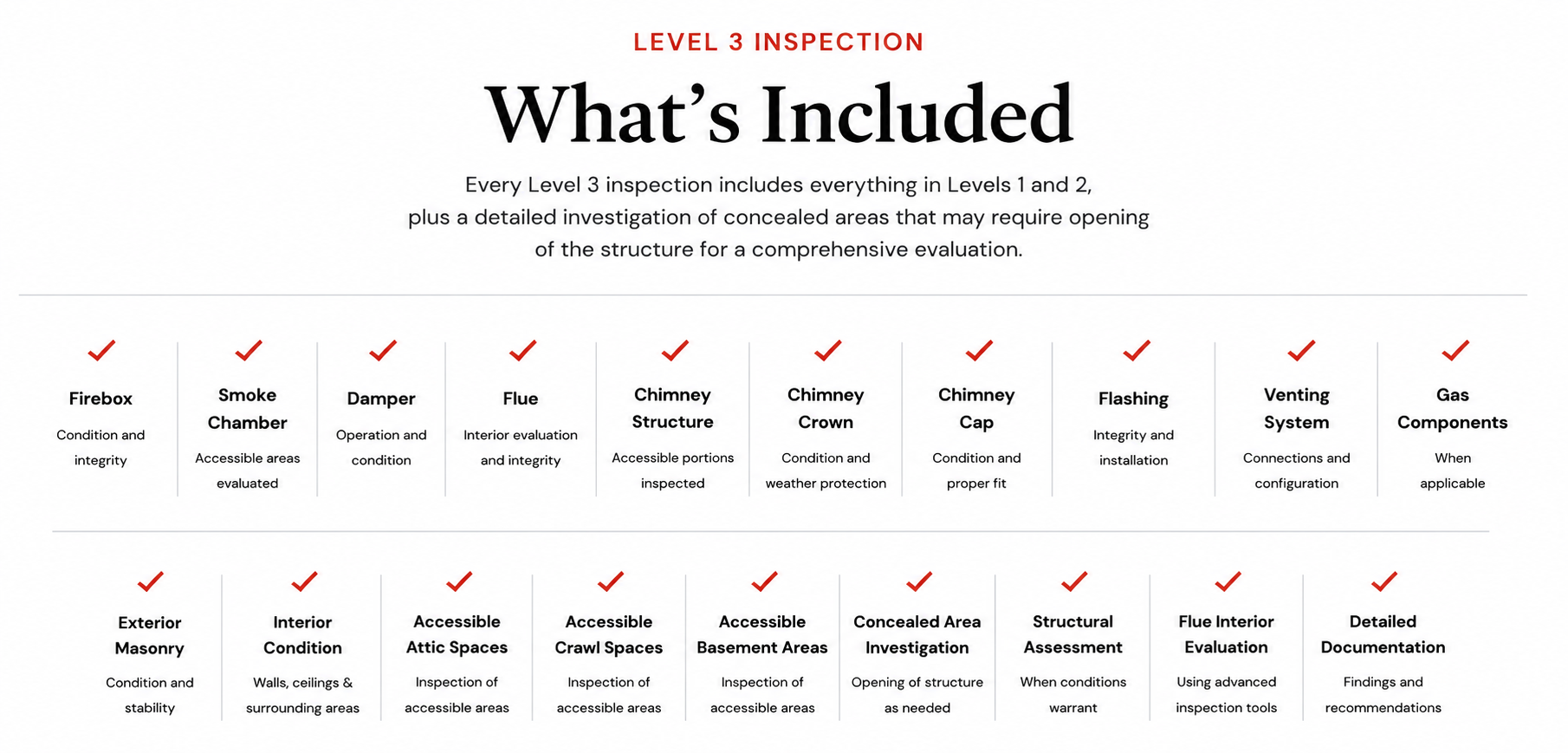
A Level 3 inspection is the most comprehensive inspection defined by NFPA 211 and is recommended only when a Level 1 or Level 2 inspection identifies conditions that require examination of concealed areas.
What is a Level 3 Inspection?
A Level 3 inspection is the highest level of chimney inspection described by NFPA 211. It is performed only when there is reason to suspect concealed hazards that cannot be properly evaluated through a Level 1 or Level 2 inspection.
A Level 3 inspection may require the removal or opening of portions of the building or chimney structure, but only as necessary to investigate the specific area of concern.
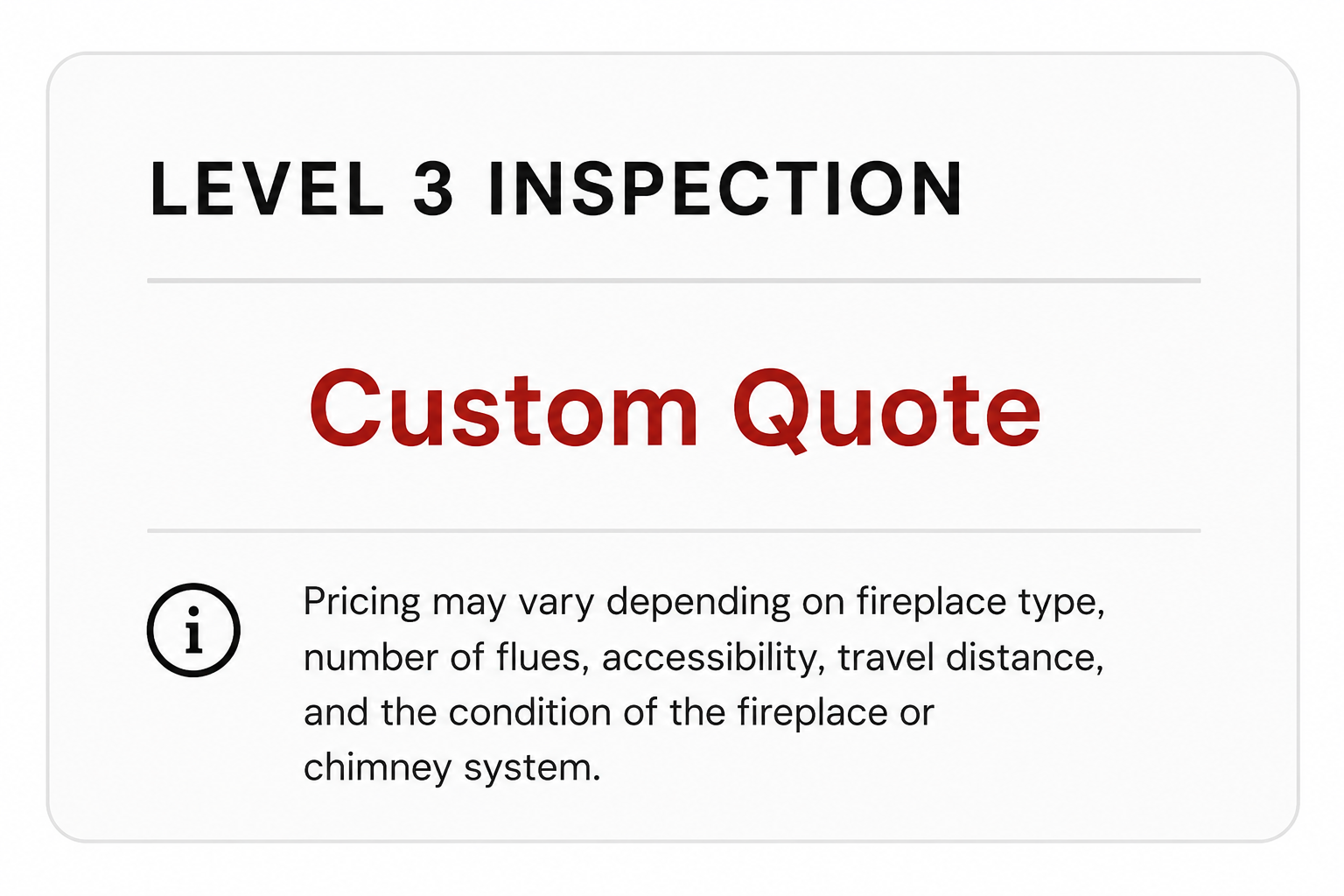
Because every situation is unique, the scope of a Level 3 inspection is determined by the conditions found and the suspected hazard being investigated.

Recommended For
✓ A hidden fire hazard is suspected
✓ Following a chimney fire
✓ After a significant structural event, such as an earthquake or impact
✓ When concealed damage is suspected
✓ When previous inspections identify conditions that cannot be fully evaluated
✓ Before major chimney reconstruction, when necessary
Why Level 3 Inspections Matter
Most fireplace and chimney systems never require a Level 3 inspection. However, when hidden damage or a potential safety hazard is suspected, a limited investigation may be necessary to determine the condition of concealed components.
Rather than relying on assumptions, a Level 3 inspection provides the information needed to understand the issue and make informed decisions about repairs or continued operation..
Frequently Asked Questions
-
No. A Level 3 inspection only involves removing or opening building materials when necessary to investigate a suspected hazard that cannot be evaluated through a Level 1 or Level 2 inspection.
-
A Level 3 inspection may be recommended if previous inspections reveal evidence of concealed damage, a chimney fire, structural concerns, or other conditions that require further investigation.
-
The recommendation is based on the findings of a Level 1 or Level 2 inspection and the guidance provided by NFPA 211. The scope of the inspection depends on the specific conditions present.
-
If access to concealed areas is necessary, only the minimum amount of building material needed to evaluate the suspected hazard is opened. The extent of access is discussed with you before work begins.
-
A Level 3 inspection is intended to investigate suspected hazards and concealed conditions. In many cases, it helps identify the cause of a problem and provides the information needed to develop an appropriate repair plan.
-
No. Most homeowners will never require a Level 3 inspection. It is reserved for situations where concealed hazards are suspected and cannot be evaluated using a Level 1 or Level 2 inspection.
-
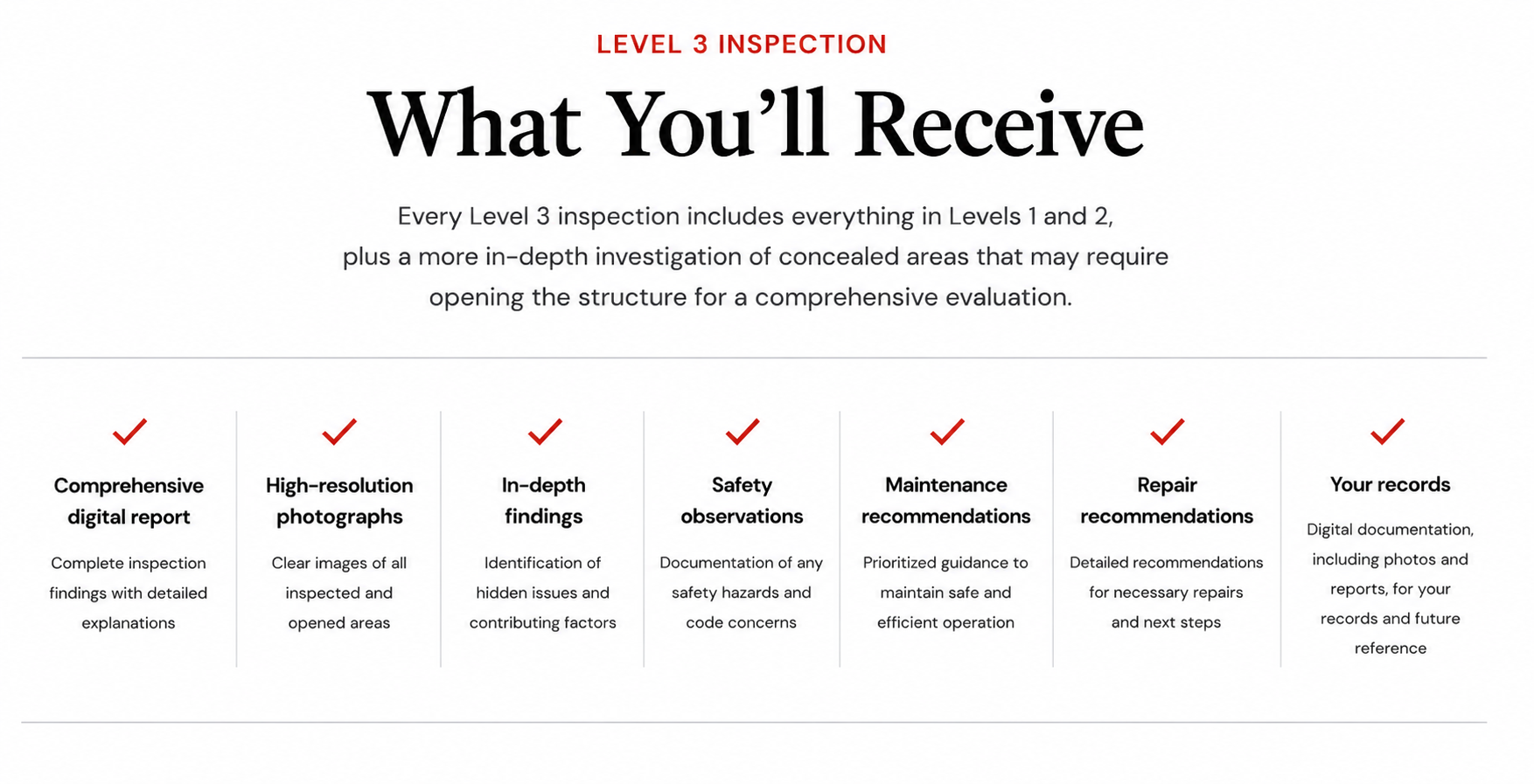
Yes. When accessible, photographs of the areas examined are included in your inspection report to help document our findings and recommendations.
-
Yes. Once the inspection is complete and the findings have been reviewed, we can discuss appropriate repair options if work is needed.
Still have questions? We're happy to help. Give us a call or schedule an inspection today.
Note: Inspection recommendations are based on the current edition of NFPA 211 and the condition of the fireplace and chimney system at the time of the inspection. The scope of each inspection may vary depending on accessibility, construction, and site conditions.